Common Socialization Mistakes With Shy Puppies
 Linda Kwoun
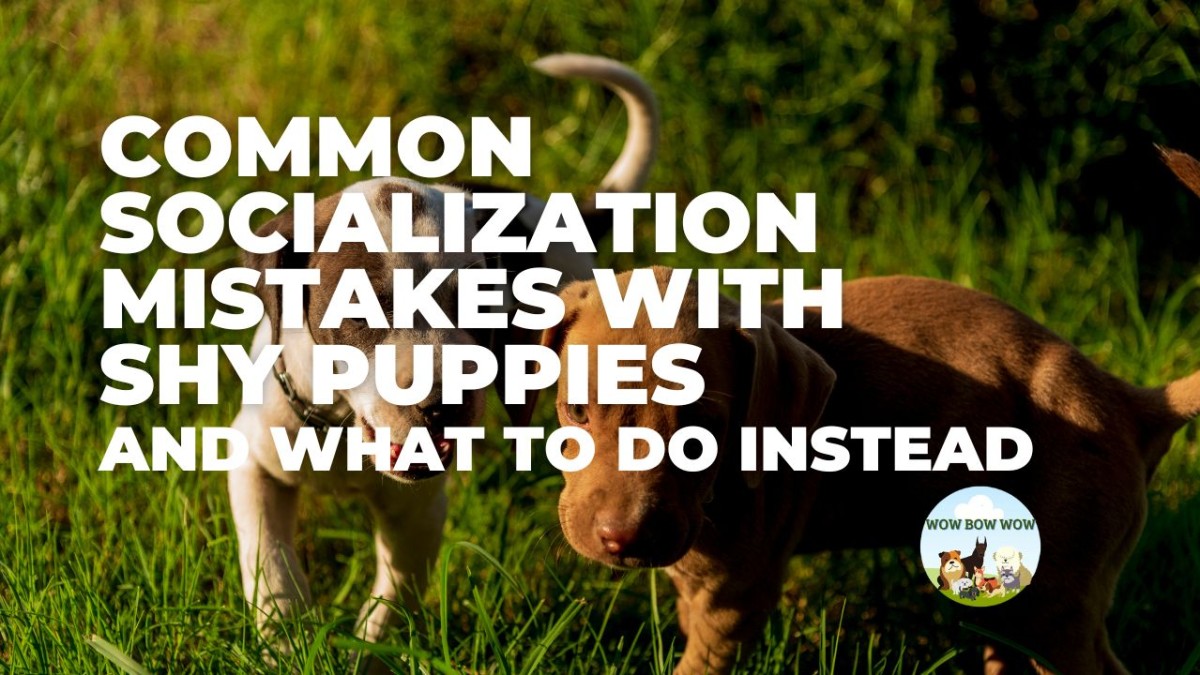
Shy puppies need understanding, patience, and guidance
If you’re raising a shy puppy, chances are you’re trying really hard to do things right.
You’ve probably:
-
Watched videos
-
Read blog posts
-
Heard advice from friends, trainers, or strangers on walks
-
Been told, “You have to socialize them now or it’ll be too late”
And yet… something still feels off.
That’s because most socialization advice wasn’t written with shy puppies in mind.
Let’s talk about the most common socialization mistakes — and how to replace them with approaches that actually build confidence.
Mistake #1: Believing More Exposure Equals Better Socialization
This is one of the most common — and damaging — myths.
Taking a shy puppy everywhere doesn’t automatically make them confident. In fact, too much exposure too fast can teach a puppy that the world is overwhelming and unpredictable.
What to do instead:
Prioritize quality over quantity.
A calm outing where your puppy feels safe is more valuable than a crowded outing that leaves them shut down.
Progress isn’t about how many places you go — it’s about how your puppy feels while they’re there.
Mistake #2: Forcing Interactions “So They Get Used To It”
Letting strangers pet your puppy when they’re unsure, or encouraging them to greet every dog, often backfires.
For shy puppies, forced interaction can increase avoidance, fear, and defensive behaviors later on.
What to do instead:
Allow your puppy to observe from a comfortable distance.
Watching is learning.
Neutral exposure builds confidence without pressure.
When puppies feel they have a choice, they engage more willingly over time.
Mistake #3: Ignoring Subtle Stress Signals
Many shy puppies don’t bark, lunge, or pull away dramatically. Instead, they communicate quietly.
Common signs of overwhelm include:
-
Turning their head away
-
Sniffing the ground excessively
-
Freezing or slowing down
-
Lip licking or yawning
-
Refusing food
These signals are often misinterpreted as distraction or stubbornness.
What to do instead:
Treat these signs as valuable information.
When you notice early stress signals and adjust the environment, you teach your puppy that their communication matters — and that builds trust, that they can rely on you.
Mistake #4: Relying on Treats to “Fix” Fear
Food can be a helpful tool, but it can’t override a stressed nervous system.
If your puppy won’t take treats, it doesn’t mean you’re failing — it means they’re overwhelmed.
What to do instead:
Create safety first.
Distance, predictability, and your calm presence are often more powerful than treats alone.
Rewards work best after your puppy feels safe enough to learn.
Mistake #5: Comparing Your Puppy to Other Puppies
Some puppies charge into the world tail-wagging. Others take their time.
Comparing your shy puppy to more outgoing dogs can create unnecessary pressure and self-doubt.
What to do instead:
Measure progress by your puppy’s baseline, not someone else’s highlight reel.
Small wins matter:
-
Faster recovery
-
Less hesitation
-
Curiosity replacing avoidance
-
Calmer body language
Confidence grows in increments.
Mistake #6: Waiting for Your Puppy to “Grow Out of It”
Shyness doesn’t magically disappear on its own.
Without thoughtful guidance, shy puppies may grow into dogs who:
-
Avoid new situations
-
React defensively
-
Struggle with change
-
Shut down under stress
What to do instead:
Support confidence development early — gently and intentionally.
Socialization done right teaches coping skills, not just exposure tolerance.
Mistake #7: Joining Group Classes That Aren’t Built for Shy Dogs
Not all group classes are created equal.
Some environments unintentionally overwhelm shy puppies by:
-
Prioritizing obedience over emotional regulation
-
Moving at a fixed pace
-
Encouraging constant interaction
-
Ignoring early stress signals
What to do instead:
Look for programs that:
-
Respect individual pacing
-
Allow distance and observation
-
Teach disengagement and settling
-
Support both dog and human confidence
This is exactly why we designed the Rambunctious to Well-Mannered Pup Program with shy and sensitive dogs in mind.
Why These Mistakes Matter Long-Term
Socialization isn’t just about puppyhood.
How your puppy learns to navigate the world now affects:
-
Leash behavior
-
Response to novelty
-
Emotional regulation
-
Trust in their human
When socialization is rushed or misunderstood, the fallout often appears months or years later.
When it’s done thoughtfully, the benefits last a lifetime.
Final Thoughts
If you recognize yourself in any of these mistakes, you’re not failing — you’re learning.
Shy puppies don’t need fixing.
They need understanding, patience, and guidance.
When you meet them where they are, they surprise you with how far they can go.
Want Support Designed for Shy Puppies?
If you’d like help navigating socialization without pressure or guesswork, the Rambunctious to Well-Mannered Pup Program provides structured guidance, real-life skills, and a pace that respects your puppy’s nervous system.
👉 Learn more here: GO HERE