Puppy Biting & Nipping:
 Linda Kwoun
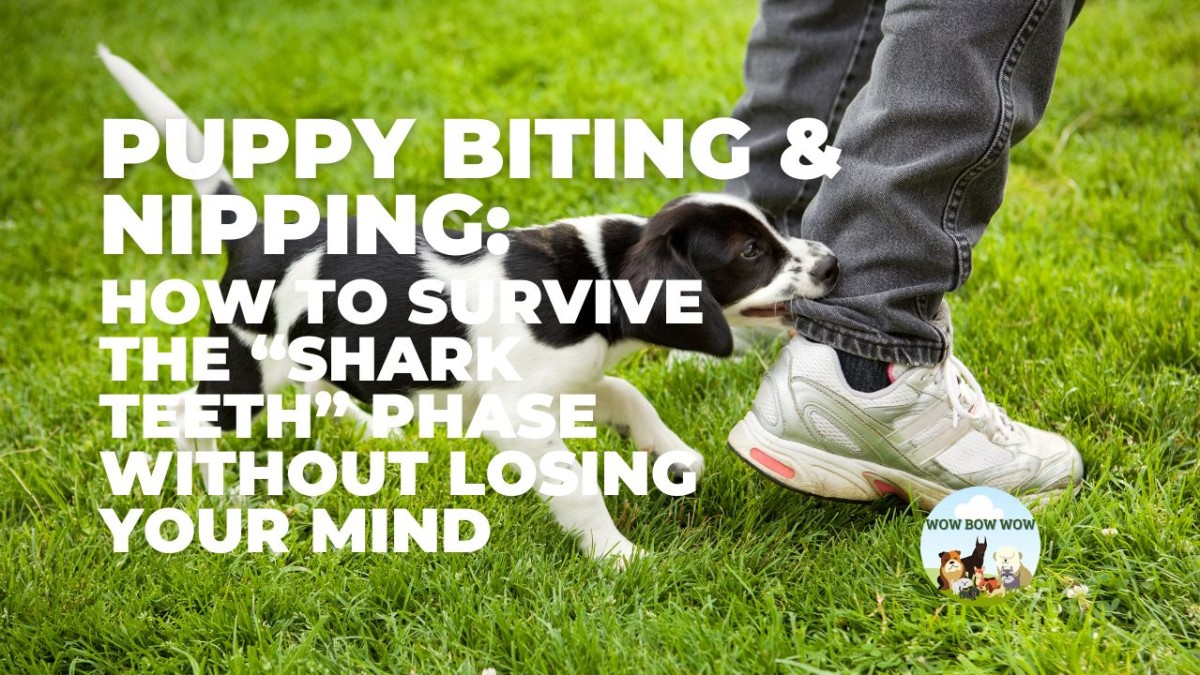
How to Survive the “Shark Teeth” Phase Without Losing Your Mind
Puppy Biting & Nipping: How to Survive the “Shark Teeth” Phase Without Losing Your Mind
If you’re a new dog parent and wondering why your adorable puppy seems determined to bite your hands, ankles, clothes, and anything within reach, take a deep breath—you’re not doing anything wrong.
Puppy biting and nipping is one of the most common (and stressful) parts of raising a young dog. It can feel shocking, frustrating, and even a little scary if you weren’t expecting it.
The good news?
👉 This phase is normal, temporary, and teachable.
Let’s break down why puppies bite, what not to do, and how to get through the puppy months with your sanity intact.
Why Puppies Bite (Even the Sweet Ones)
Puppies don’t come preloaded with “good manners.” Biting is how they:
-
Explore the world
-
Play and interact
-
Communicate excitement or frustration
-
Relieve teething discomfort
-
Learn boundaries
-
Let you know they’re uncomfortable or need space
In a litter, puppies learn bite inhibition by playing with siblings—when they bite too hard, play stops. When they come home to us, we become their littermates, and they’re still figuring out what’s appropriate.
This isn’t aggression.
Most of the time, puppy biting is simply immature impulse control and big feelings in a tiny body.
While the majority of puppy nipping is normal development, persistent hard biting, biting that escalates quickly, or biting paired with fear or freezing is a sign it’s time to bring in professional support.
When Biting Is Most Likely to Happen
You’ll often see an increase in nipping when your puppy is:
-
Overtired or overstimulated
-
Overexcited during play
-
Teething
-
Hungry
-
Frustrated or confused
-
Lacking an appropriate outlet
-
Communicating that they don’t like what’s happening
Many new dog parents assume biting means their puppy needs more exercise or stimulation—but often, the opposite is true.
What NOT to Do (Even If You’re Desperate)
It’s easy to get overwhelmed and try quick fixes you’ve seen online or heard from others—especially when the biting scares you (and yes, it hurts).
Unfortunately, some common advice can actually make biting worse:
🚫 Yelling or scolding
🚫 Hitting or grabbing their mouth
🚫 Alpha or dominance techniques
🚫 Forcing toys into their mouth aggressively
🚫 Expecting a young puppy to “know better”
These responses increase frustration, fear, and confusion—often leading to more biting, not less.
What Actually Helps: Puppy-Biting Survival Strategies
1. Manage the Environment First
Prevention is powerful.
-
Keep toys within reach at all times
-
Use baby gates or playpens during high-energy moments
-
Avoid rough play that encourages grabbing skin
If biting keeps happening in the same situations, that’s information—not failure.
2. Teach “Biting Makes Fun Stop”
Puppies learn through consequences, not punishment.
-
If teeth touch skin, pause play immediately
-
Calmly remove your attention for a few seconds
-
Resume play once your puppy settles
This mirrors how puppies learn from each other and helps build bite inhibition. These strategies work best when everyone interacting with your puppy responds the same way.
3. Prioritize Rest (Seriously)
An overtired puppy is a bitey puppy.
Many young puppies need 18–20 hours of sleep a day. If your puppy turns into a land shark in the evening, they may not need more play—they may need a nap.
Ask yourself: When was the last time my puppy truly rested?
4. Reward Calm, Gentle Choices
Don’t just focus on stopping biting—notice what you want more of.
-
Reward gentle play
-
Praise calm interactions
-
Reinforce moments when your puppy chooses toys over hands
Learning happens faster when puppies know what to do. That’s the goal—not having to micro-manage your puppy forever.
5. Be Patient With the Process
Biting doesn’t disappear overnight. It improves gradually as your puppy:
-
Develops impulse control
-
Finishes teething
-
Learns better coping skills
-
Builds trust and communication with you
Progress often looks messy before it looks better.
When Extra Support Can Make a Big Difference
If puppy biting feels intense, overwhelming, or you’re worried about safety, you don’t have to figure it out alone.
Professional guidance can help you:
-
Identify your puppy’s specific triggers
-
Adjust daily routines that may be fueling the biting
-
Build skills at your puppy’s pace
-
Support you, not just your dog
Ready for Support That Fits Your Puppy?
I offer multiple training options so you can get the right level of support for your puppy—and your life:
-
Private training sessions for personalized, one-on-one guidance
-
Day training for hands-on support during the week while they are at daycare
-
Board & Train options for families who need more intensive help
We’ll focus on understanding why your puppy is biting and teaching skills that actually stick—without force or fear.
👉 Reach out to talk through your options and find the best fit for you and your puppy. Call/text me at: 714-794-9625
The Big Picture: This Phase Will Pass
Right now, it might feel like your puppy is biting all the time. But this stage is just one chapter in your dog’s development—not a prediction of who they’ll become.
With consistency, observation, and compassion, your puppy will learn how to interact safely and calmly.
And one day soon, those sharp little teeth will be gone—
replaced by a dog who trusts you, listens to you, and knows how to be gentle. 🐾