Stop Correcting Your Dog. Start Communicating Instead.
 Linda Kwoun
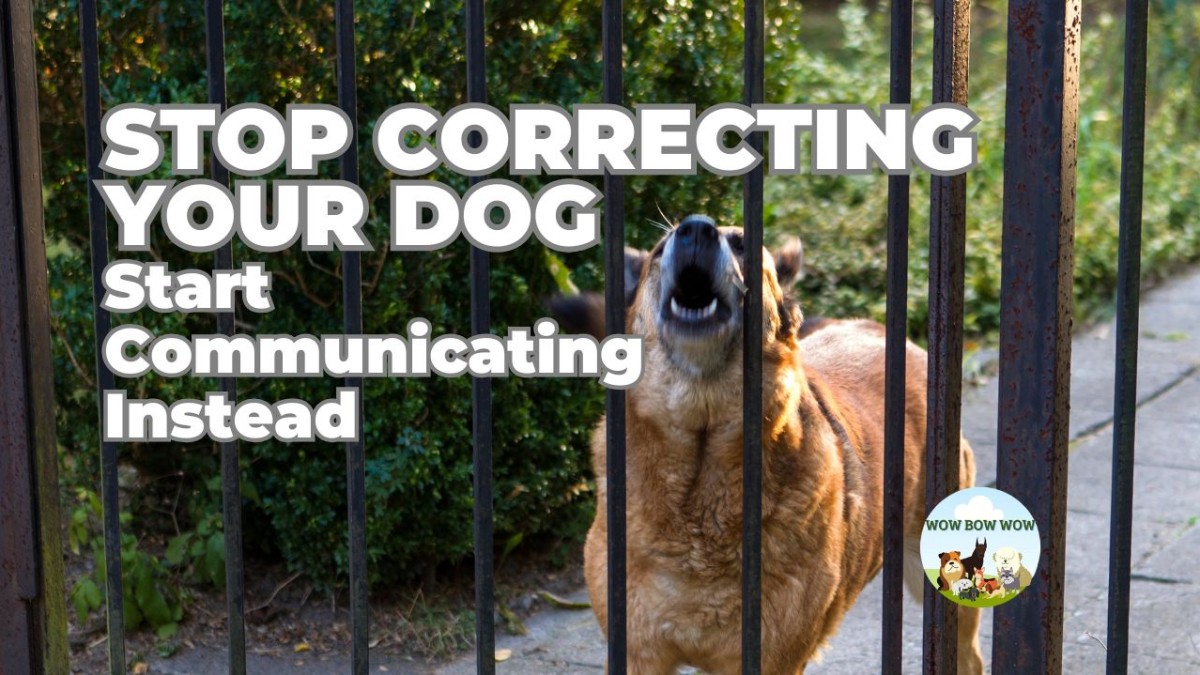
Why “correction” might be holding you back—and what to think instead
In dog training, words matter more than we realize.
Not just in what we say to our dogs—
but in how we think about their behavior.
Because the words we use shape our mindset.
And our mindset shapes how we respond.
And the way we respond… shapes the dog in front of us.
The Problem with “Correction”
A lot of people say they need to correct their dog.
- Correct the barking
- Correct the pulling
- Correct the jumping
But pause for a moment and ask yourself:
What does the word “correction” imply?
It assumes the dog is doing something wrong.
Something bad.
Something that needs to be stopped.
And that belief—often without us realizing it—changes our entire approach.
It makes us reactive instead of proactive.
It makes us focus on stopping the dog… instead of understanding them.
Dogs Don’t Think in “Right” or “Wrong”
Here’s a shift that changes everything:
Dogs don’t have a moral framework.
They’re not thinking:
“I was bad.”
“I shouldn’t have done that.”
“That was wrong.”
That’s human thinking.
Dogs don’t operate from “good vs bad” or “right vs wrong.”
They operate from outcomes.
👉 What worked
👉 What didn’t
If a behavior leads to relief, safety, access, or connection…
they’re more likely to do it again.
If it doesn’t…
they move on.
That’s it.
Behavior Isn’t Bad. It Has a Purpose.
Your dog isn’t trying to be difficult.
They’re responding to something in their environment in a way that makes sense to them.
Barking at another dog?
→ They might be worried or trying to create space
Pulling on leash?
→ They’re trying to get somewhere important
Jumping on guests?
→ They’re excited and seeking connection
These are not “bad” behaviors.
They are normal biological responses.
When we label them as bad, we miss the most important question:
👉 Why is this behavior happening?
Because when you understand the why, everything changes.
What Happens When We Only “Correct”
To be fair—this is what most people have been taught.
It’s what you hear everywhere.
And when you’re frustrated, overwhelmed, and just want it to stop…
Of course you go back to correction.
Anyone would.
And yes—corrections can stop behavior in the moment.
But what’s actually happening?
Your dog may stop…
not because they understand what to do instead,
but because they’re trying to avoid your reaction.
That means:
- The behavior isn’t truly resolved
- The underlying emotion and reason is still there
- And your dog hasn’t learned a better choice
So what happens when you’re not around?
Or when the situation feels more intense?
The behavior comes right back.
A Quick Reflection (For Us, the Humans)
The way we respond to our dog’s behavior doesn’t come out of nowhere.
It comes from our own reference point.
👉 How we were taught to solve problems
👉 How we handle frustration
👉 How we resolve conflict
Some of us were taught to shut things down quickly.
Some of us were taught to correct.
Some of us were taught that stopping the behavior is the solution.
So when your dog is barking, pulling, or jumping…
You’re not just responding to your dog.
You’re responding from your own conflict resolution style.
A More Effective Approach: Guiding Behavior
Instead of asking:
❌ “How do I stop this behavior?”
We shift to:
✅ “What is my dog trying to accomplish?”
✅ “What would I prefer they do instead?”
This is what professionals call behavior modification.
But really—it’s just guidance.
Now we’re not just stopping behavior.
We’re preventing, interrupting, and guiding it.
Choosing the Right Alternative Behavior
Here’s where many people get stuck.
They choose an alternative behavior that looks good to humans…
but doesn’t make sense to the dog.
And that’s where training falls apart.
Teaching alternatives takes:
- Patience
- Consistency
- Reinforcing the choices you want to see
And just as importantly:
- Preventing unwanted behaviors when possible
- Interrupting gently when they happen
- Immediately guiding your dog to a better option
Instead, ask:
👉 What would my dog be happy to do instead?
Because the goal isn’t to suppress your dog’s instincts.
It’s to work with them.
For example:
- Instead of pulling → teach them to stay within a comfortable “bubble” near you
- Instead of barking → teach them to disengage and look away
- Instead of jumping → teach a calmer way to greet that still gets them connection
Now your dog isn’t being shut down.
They’re being shown a better option that still meets their needs.
The Real Goal: Choice, Not Compliance
The long-term goal isn’t a dog who behaves because they’re worried about being corrected.
It’s a dog who:
✔ Feels safe
✔ Understands the situation
✔ And chooses the behavior you’ve taught
That’s a completely different outcome.
That’s where real-life reliability comes from.
Why Words Matter
When we say “correction,” we focus on stopping behavior.
When we say “guiding” or “behavior modification,”
we focus on understanding, teaching, and communicating.
One approach is about control.
The other is about clarity.
And that shift—just in language—can completely change:
- How you see your dog
- How you respond in the moment
- And how successful your training becomes
Final Thought
Your dog isn’t trying to be bad.
They’re trying to navigate the world the only way they know how.
Your job isn’t to correct them for that.
Your job is to show them a better way that makes sense to them.
Because when it makes sense to your dog…
that’s when the behavior truly changes.
And that’s when your relationship with your dog truly transforms.
If You Want Support
If this shifted how you’re thinking about your dog—and you’re realizing you don’t want to just stop behaviors, but actually understand and guide them—you don’t have to figure it out on your own.
Sometimes it’s just about having a clear plan for your dog in your real-life situations.
If you’d like help with that, you’re welcome to reach out.
📞 Call or text me at 949-736-4765
We can talk through what’s going on with your dog and map out the next best step—without pressure, just clarity.