Stop Dog Jumping | Orange County Dog Trainer
 Linda Kwoun
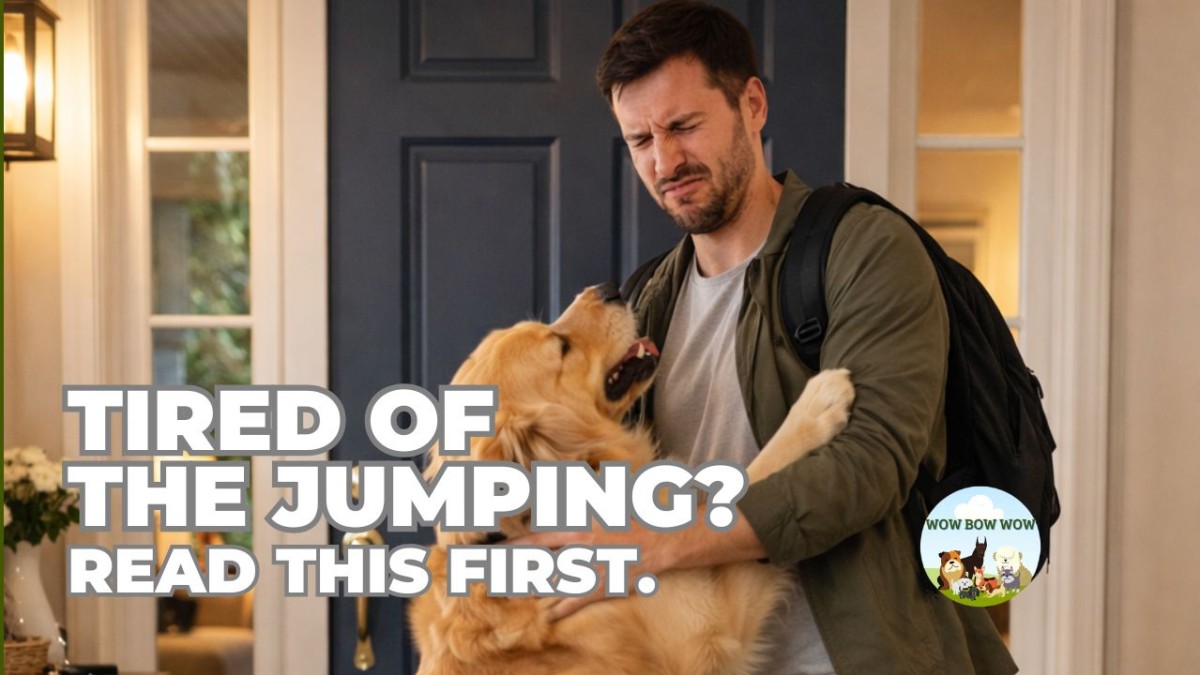
Tired of your dog jumping on guests & you? Get expert dog training in Orange County that teaches calm greetings and lasting behavior change.
Why Your Dog Jumps on You (and Your Guests) — And How to Stop It the Right Way
If you’ve ever thought…
“Please don’t jump. Please don’t jump.”
right before opening your front door…
This is for you.
Whether it’s guests walking in or you coming home from work, jumping can feel overwhelming. Embarrassing. Frustrating.
You might be saying:
-
“He doesn’t usually do this…”
-
“We’ve worked on this!”
-
“I swear she’s a good dog.”
And here’s what I want you to hear clearly:
Your dog isn’t being disrespectful.
They’re not dominant.
And they’re not trying to embarrass you.
Jumping is usually much simpler than that.
Why Dogs Jump
Jumping is about excitement and proximity.
It’s:
-
Big feelings in a growing body
-
A nervous system spike
-
A behavior that has worked before
Dogs jump because:
-
Humans are interesting
-
Faces are where connection happens
-
Jumping has gotten attention in the past
-
They don’t yet know what to do instead
When excitement rises, the body moves up and forward and sometimes spinning.
The jump is just overflow.
This isn’t a manners problem.
It’s an arousal problem.
It Happens at Home Too (Especially With You)
One of the biggest misconceptions is that jumping is only a “guest issue.”
Often, it’s worse when you come home.
Because you’re their favorite person.
You walk through the door, and their nervous system explodes with excitement. If that energy doesn’t have structure, it turns into jumping.
They lack regulation in that moment.
And regulation is a skill.
(p.s. This doesn’t mean your dog loves you less if they don't show that excited greeting.)
Prevention Means Management
If your dog doesn’t yet have the skills to greet politely, prevention is essential.
Every time jumping is rehearsed, it gets stronger.
Management isn’t giving up.
It’s protecting the training.
That might look like:
-
Keeping your dog on leash when guests arrive
-
Using a gate or door to allow excitement to settle
-
Letting arousal peak and pass before greeting
-
Asking guests to ignore your dog until four paws are on the floor
And yes — practice this when you come home.
If your dog explodes at the door:
Pause.
Step back outside if needed.
Use a barrier.
Wait for calm before engaging.
You’re not withholding affection.
You’re teaching your dog that calm behavior makes connection happen.
Training sticks when dogs practice the right behavior more often than the wrong one.
Don’t Just Say “No.” Teach What To Do Instead.
“Don’t jump” isn’t a behavior.
Instead, teach a clear alternative:
-
Sit or lie down to greet
-
Four paws on the floor
-
Hand target
-
Step back and reset
Reward that behavior consistently.
We’re not suppressing excitement.
We’re channeling it into something successful.
Disengagement Is the Missing Piece
Excited dogs don’t need more contact.
They need more regulation.
Short greetings work better than long ones.
Practice:
Greeting → disengage → re-engage.
Reward stepping away.
Keep interactions structured.
When dogs learn they can move off and still access connection, jumping loses urgency.
What Real Progress Looks Like
Progress won’t be perfect.
It may look like:
-
A quicker sit
-
A shorter jump attempt
-
Faster recovery
-
You noticing the buildup sooner
-
Feeling calmer yourself
That matters.
Polite greetings aren’t about control.
They’re about helping your dog manage excitement successfully.
Four paws on the floor starts with a regulated nervous system.
And that skill carries into everything else.
Ready for Calmer Greetings?
If you’re tired of bracing yourself at the door — whether it’s guests arriving or you coming home — you don’t have to guess your way through it.
I offer:
• Rambunctious to Well-Mannered Pup Group Classes
• Private In-Home Training
• Day Training / Board & Train options
Call or text 714-794-9625 and we’ll talk through what support makes the most sense for you and your dog.
Because raising a well-mannered dog isn’t about being perfect.
It’s about knowing what to do next. 💛